

Grid-tied/off-grid and weak grid microgrids: stable power where the grid is unreliable
A grid-tied/off-grid microgrid operates in both grid-connected and off-grid modes, while a weak grid microgrid is specifically designed for end-of-line supply scenarios with low short-circuit capacity and large voltage fluctuations. The technical core of such systems comes down to one term: Grid-Forming. Grid-following equipment acts like a "follower" and must rely on an external voltage and frequency reference to operate; a weak grid is precisely where that reference is lacking. On such lines, ordinary grid-following PCS units experience voltage sags, frequency deviation, or even failure to connect to the grid. VGID POWER's solution uses grid-forming PCS to actively establish the voltage and frequency reference, combined with seamless grid-tied/off-grid switching, to achieve "use the grid when power is available, use storage when it is not."
- 0msAll-in-one cabinet active grid-tied/off-grid switching
- <20msPassive switching / STS module switching time
- 125%Grid-connected unbalance tolerance
- -20%~+15%Grid voltage adaptation range
Grid-following vs. grid-forming: the essential difference
This is the first dividing line in weak grid equipment selection, and the root cause of many cases where "equipment is installed but cannot drive the load."
Grid-Following
Principle: measures the voltage and frequency phase of the external grid and outputs current synchronized to it. Essentially a "current source."
Precondition: a sufficiently strong external grid must exist as a reference. When short-circuit capacity is insufficient or a remote fault causes voltage collapse, grid-following equipment loses its synchronization reference.
Typical behavior: when end-of-line voltage sags, current commands cannot be executed, grid-connection faults are reported, frequency deviates, and the unit may repeatedly disconnect from the grid.
Grid-Forming / VSG
Principle: actively establishes the voltage amplitude and frequency reference, outputting voltage and phase. Essentially a "voltage source," and the true main power source in the system.
Key capability: operates independently without an external reference; the voltage waveform is generated by its own algorithm, giving it strong disturbance rejection.
Engineering value: enables PV, diesel generators, and other grid-following equipment to "attach" and run stably, and can also form an island on its own.
One-line test
If the end-of-line voltage still sags at noon on a clear day when PV is at full output, grid-forming is required. The criterion is simple: measure the short-circuit capacity at the point of common coupling and the end-of-line voltage once on site; if either is below nominal capacity or the voltage deviation exceeds limits, the line falls into the weak grid category.
Engineering implementation of grid-tied/off-grid switching
There are two switching paths: integrated inside the equipment, or deployed as a standalone module. The two differ noticeably in retrofit cost and switching time.
Path one: PCS-integrated switching (all-in-one cabinet solution)
The [SP250HAG2T PV-storage grid-tied/off-grid all-in-one cabinet](/zh/product/sp250hag2t-2) integrates a PCM grid-tied/off-grid transfer switch, with 0ms active switching time and <10ms passive switching time. On site, only the grid and load connections are needed; the system automatically performs detection and switching without a separate transfer device. This is the least troublesome approach for new projects.
Path two: standalone STS module (retrofit solution)
When adding grid-tied/off-grid capability to an existing system, a [STS200/400/600 static transfer module](/zh/product/sts200-400-600) is typically installed on the AC bus: rated 200/400/600kW, maximum AC current 330/660/1000A, switching time <20ms, with integrated bidirectional detection on the grid side and load side, LocalEMS, and RS485/CAN/4G communication. The drawback is an additional energy conversion loss and equipment cost.
What switching time means
The engineering significance of switching time depends on the nature of the load. Lighting, IT, and control circuits can accept interruptions on the order of hundreds of milliseconds; precision machining, medical equipment, and semiconductor production lines may directly produce scrap or shut down on a transient interruption. Switching time should be selected based on the most sensitive load category, not the average requirement.
VGID POWER grid-tied/off-grid / weak grid product portfolio
The mainstay is the grid-forming all-in-one cabinet, supplemented by wall-mounted models and standalone transfer modules, covering 30kVA to 500kVA.
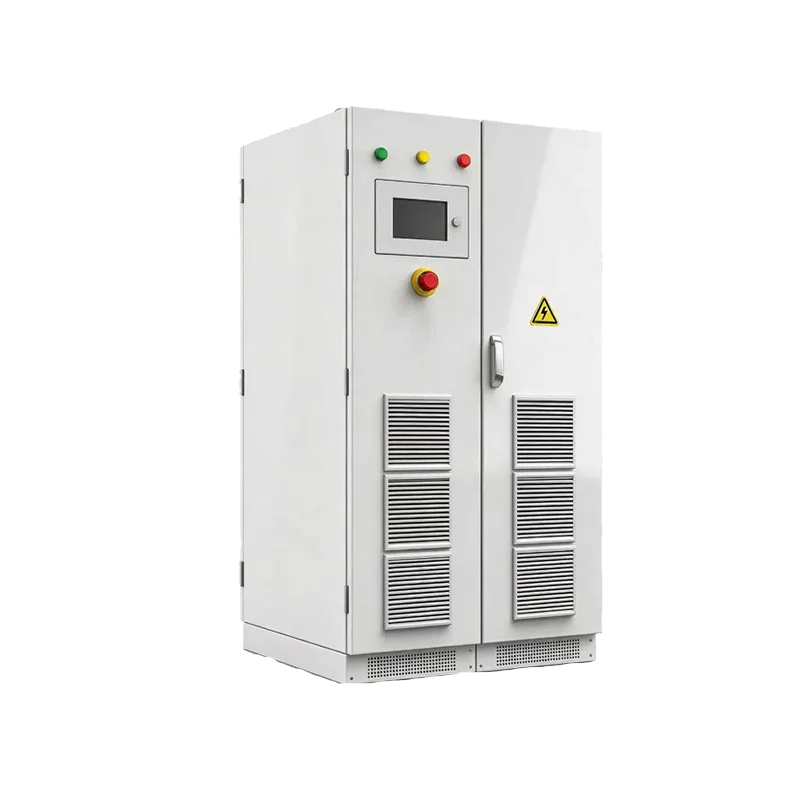
PV-storage grid-tied/off-grid all-in-one cabinet (grid-forming)
- Rated power (grid-connected)250kVA
- Maximum output (off-grid)275kVA
- Active switching time0ms
- Passive switching time<10ms
- Isolation transformerBuilt-in
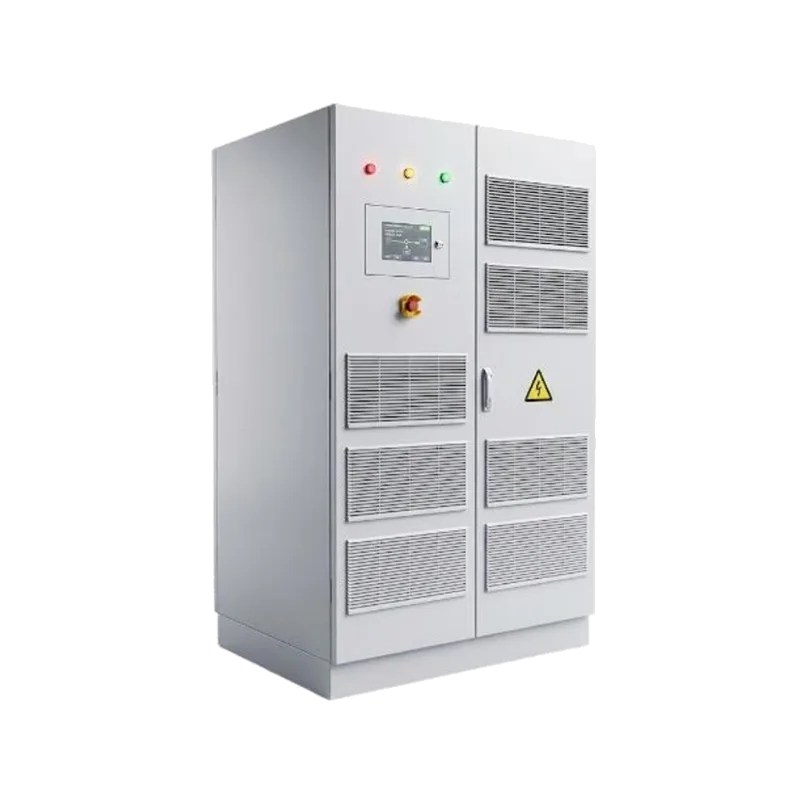
Series PV-storage grid-tied/off-grid all-in-one cabinet
- Rated power (grid-connected)375kVA / 500kVA
- Active switching time0ms
- Passive switching time<20ms
- Grid-connected unbalance125%
- Off-grid unbalance100%
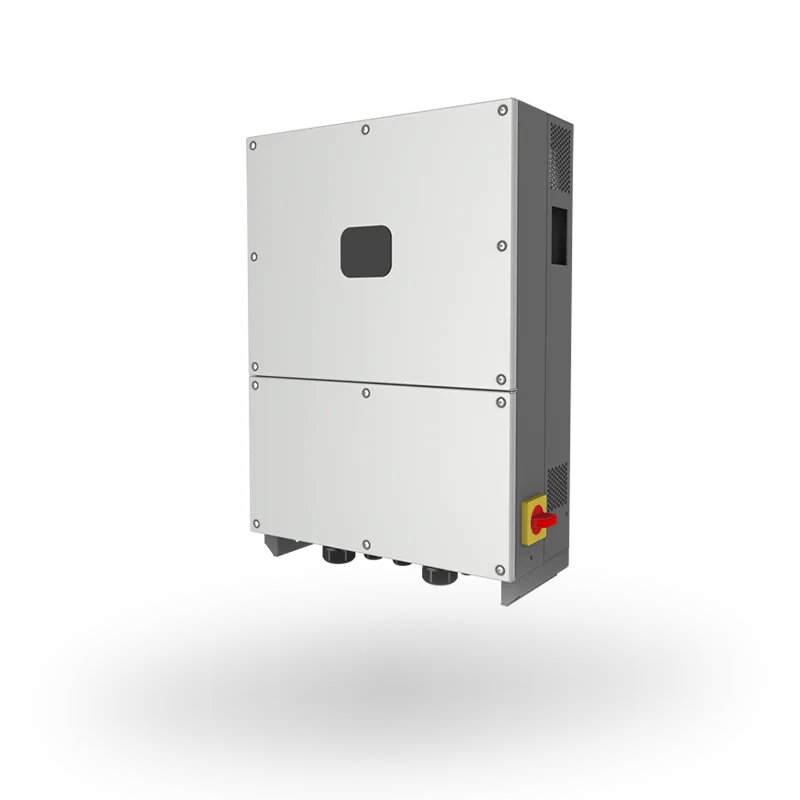
Microgrid power conversion system (optional integrated STS)
- Rated power (grid-connected)125kVA
- Grid-tied/off-grid switching time<10ms
- Maximum efficiency98,5%
- Coupling modeDC / AC
- Overload capability125%
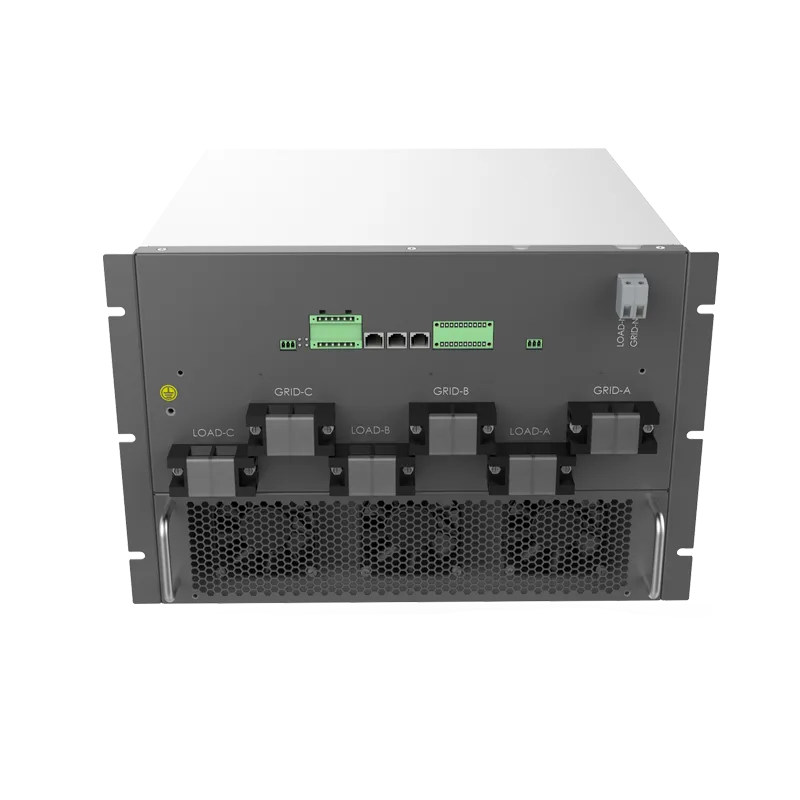
Static transfer module STS
- Rated power200KW / 400KW / 600KW
- Maximum AC current330A / 660A / 1000A
- Switching time<20ms
- Frequency range50/60Hz (±5Hz)
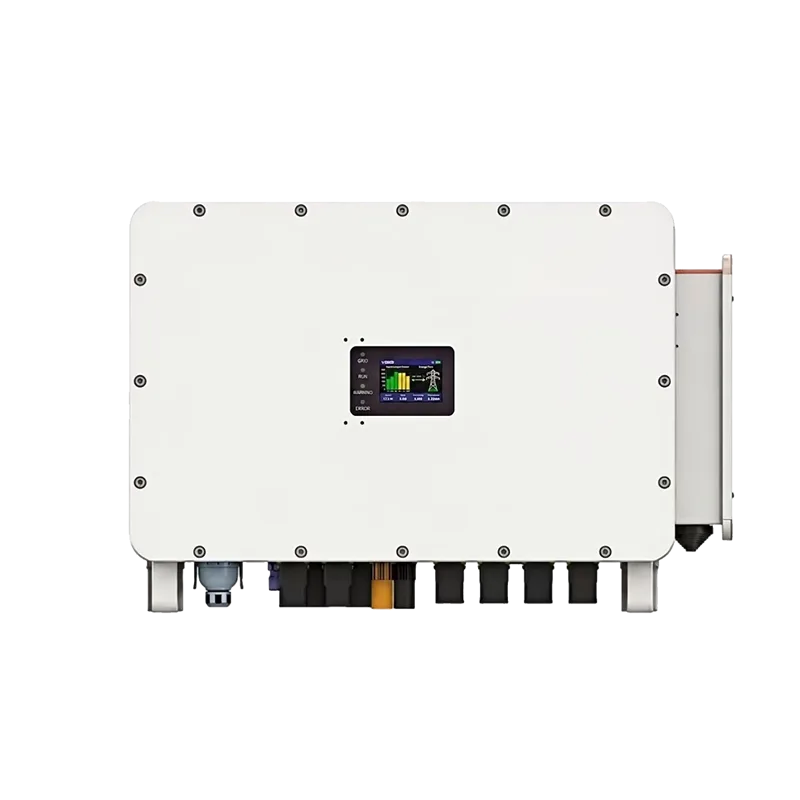
Wall-mounted microgrid power conversion system
- Protection ratingIP65
- InstallationWall
- Maximum bypass current230A
- ATS dual AC inputBuilt-in
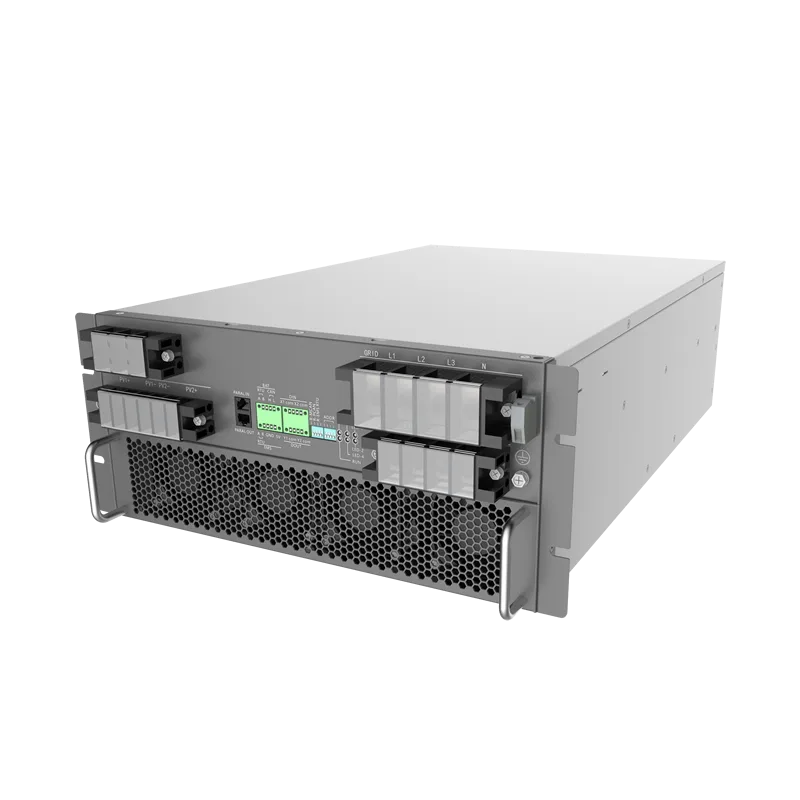
Hybrid inverter (small to medium power)
- Rated power (grid-connected)60/50/40/30kVA
- Maximum efficiency98,2%
- Overload capability150%
- Compatible cells280/314Ah
Technical challenges in weak grid scenarios
Four typical symptoms of a weak grid, interrelated but requiring separate treatment.
Low short-circuit capacity, voltage prone to fluctuation
Short-circuit capacity determines how "stiff" the grid is. The smaller the capacity, the greater the voltage deviation caused by the same power disturbance. After high-power PV or storage is connected to an end-of-line feeder, the voltage may fall outside the ±7% range allowed by GB/T 12325; once the voltage at the point of common coupling collapses, an ordinary grid-following PCS will directly report a grid-connection fault.
Voltage unbalance and harmonics
On rural grids and end-of-line feeders with a high proportion of single-phase loads, voltage unbalance may far exceed the standard. VGID POWER models tolerate 125% unbalance when grid-connected and 100% on the off-grid side, with output voltage harmonics below 2% under resistive loads — this determines whether the equipment can avoid nuisance tripping on overcurrent protection under unbalanced loads.
Frequency fluctuation and insufficient inertia
As large numbers of synchronous generators are retired, the system's equivalent inertia drops, making frequency more sensitive to power imbalance. Grid-forming PCS actively responds to frequency changes through its own control loop, effectively supplementing the system with virtual inertia — which is why it keeps voltage and frequency more stable in a weak grid.
End-of-line voltage sag
The farther from the point of common coupling, the more the line voltage drop accumulates. A typical field method: measure the voltage difference between the point of common coupling and the end of the line during full-load periods; if the deviation exceeds 7%, the line should be designed as a weak grid, and the PCS selection should be changed from grid-following to grid-forming.
All all-in-one cabinets have built-in grid-forming operation capability and a grid-tied/off-grid transfer switch; the SP250HAG2T additionally has a built-in isolation transformer, suitable for projects requiring electrical isolation.
Typical application scenarios
VSG grid-forming PV-storage
In areas where high PV output raises end-of-line voltage, grid-forming PCS absorbs power in reverse, stabilizing voltage while achieving PV consumption.
Distribution transformer area storage
Voltage management for rural low-voltage distribution areas. Wall-mounted models deploy quickly and take up little space, suitable for distributed placement.
PV-storage-diesel AC/DC coupled microgrid
PV, batteries, and PCS share a DC bus; DC-coupled charging efficiency exceeds 99.3%, eliminating one energy conversion stage.
Factories in weak grid areas
Voltage sags cause frequent equipment restarts or power quality non-compliance; supply quality must be addressed before energy savings.
Islands and remote areas
End-of-grid or intermittent supply scenarios requiring grid-connected operation when mains power is available and automatic takeover of critical loads during outages.
Critical load backup power
For production lines and medical facilities sensitive to switching time, select the switching time specification based on the most sensitive load.
Emergency power and diesel-storage hybrid
During grid outages, storage takes over while the diesel generator starts in sync as long-duration backup, with the two sharing duties based on SOC.
PV arbitrage with storage
For renewable energy projects with voltage limit constraints at the point of common coupling, grid-forming storage can simultaneously meet grid-connection codes and consumption requirements.
Design and implementation key points
-
① Clarify the location of the point of common coupling and the switching point
Their locations directly determine the transient during switching. If the switching point is far from the critical load, the voltage sag at the moment of switching will reach the load first. In engineering practice, the switching point should be placed as close to the load side as possible, or a transition capacitor should be installed ahead of the critical load.
-
② Determine the SOC operating window
The SOC window of a grid-tied/off-grid system is much narrower than that of a pure grid-connected system: it must reserve a dispatchable range for peak shaving and valley filling, while also preserving energy for backup during outages. In practice, the discharge lower limit is usually set at 30%–40%, depending on the trade-off between backup duration requirements and battery cycle life.
-
③ Verify load starting inrush
At the moment of switching to off-grid, the battery must bear the starting inrush of the entire load alone. VGID POWER models generally support 1.1× continuous / 1.25× short-time overload (SP60HCG2 up to 150%), but the starting current of the largest single motor, at 6–7×, must still be calculated separately and cannot be replaced by total rated power.
-
④ Protection and anti-islanding
The protection logic of a grid-tied/off-grid system is more complex than that of a pure grid-connected system: it requires anti-islanding protection (to prevent unintentional islands) while also ensuring that intentional islands (after switching) can be properly established. The two require different criteria and time delays and must be configured separately in design; they cannot share a single set of settings.
-
⑤ Communication and coordination for multi-unit paralleling
When multiple grid-forming PCS units are paralleled, there must be only one master frequency source. In practice, one unit is typically designated as the master to establish the voltage and frequency reference, with the others following as slaves; if two units establish references simultaneously, frequency fighting and circulating currents will occur. The SP250HAG2T and SP375/500HAG2 both support paralleling of 3 units.
-
⑥ Environment and protection rating
Weak grid projects are mostly located outdoors or semi-outdoors: wall-mounted models use IP65 (SP135HAPSS), and all-in-one cabinet enclosures use IP54 (SP250HAG2T, SP375/500HAG2). In high-temperature areas, note derating above 45℃; at altitudes above 2000m, derating is also required.
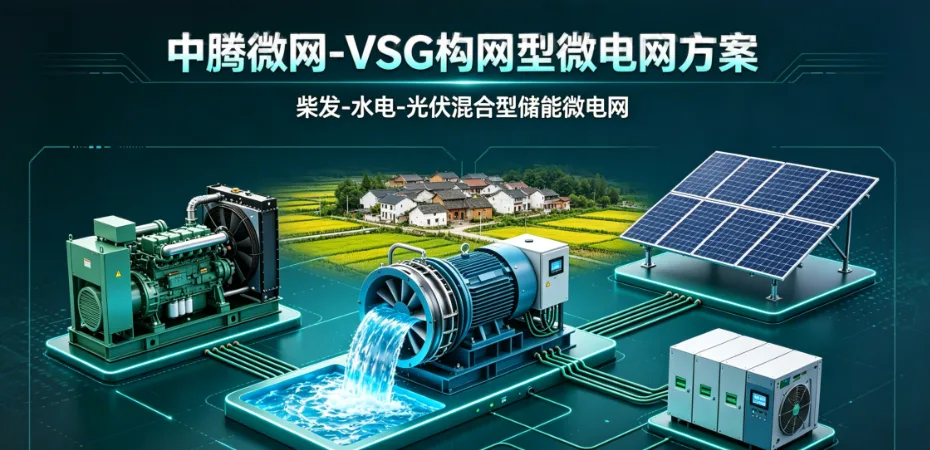
Project gallery







Frequently asked questions
Will grid-tied/off-grid switching cause equipment shutdown?
No. Grid-forming PCS keeps running throughout the switching process — this is the fundamental difference from "stop first, restart later" solutions. VGID POWER all-in-one cabinets have 0ms active switching time and <10ms passive switching time, with uninterrupted load during switching. What actually shuts down is pure grid-following equipment, because it cannot maintain output after losing the grid reference.
Why must grid-forming equipment be used in weak grid areas?
Because a weak grid precisely lacks what grid-following equipment depends on — an external voltage and frequency reference. On lines with low short-circuit capacity, the voltage at the point of common coupling may sag to the point where grid-following equipment loses lock. At that point, the only thing that can actively establish voltage is grid-forming PCS. This also explains why some projects "connect to the grid fine but cannot drive the load": it is not that the equipment power is insufficient, but that it cannot operate under a weak reference.
If ordinary grid-connected storage is already installed, can it be upgraded to grid-tied/off-grid?
It depends on whether the existing equipment supports off-grid operation. Most ordinary grid-connected PCS units do not have off-grid output capability and cannot gain it through a software upgrade; the equipment must be replaced. A feasible compromise is to install a standalone STS module on the AC bus and connect storage capable of off-grid operation, but this usually still requires adding a storage system. Therefore, clarifying whether grid-tied/off-grid capability is needed at the project's outset is far more economical than retrofitting later.
Does grid-forming equipment have additional losses in grid-connected mode?
Grid-forming and grid-following designs have similar power conversion stages and comparable efficiency levels. The real loss difference comes from topology rather than control method: an all-in-one cabinet integrates MPPT and distribution inside the enclosure, reducing additional AC combiner stages; an AC-coupled solution adds an extra conversion stage. Whether it is worthwhile should be judged by switching capability requirements rather than loss differences.
How is switching time verified?
Field measurement: install a power recorder (or use an oscilloscope) on the critical load, manually disconnect the point of common coupling, and record the duration of load voltage interruption. VGID POWER products have factory specifications of 0ms active and <10ms passive; actual values are affected by switch mechanical action and detection logic, so acceptance should be based on measured values and written into the acceptance report.
How is diesel hybrid operation implemented?
Essentially, the diesel generator is kept operating only in its high-efficiency range. When battery SOC falls below a threshold, or the load exceeds PCS output capability, the diesel generator starts and supplies power in parallel with the PCS; when SOC is sufficient and the load is small, the diesel generator stops and the battery carries the entire load. The EMS decides in real time who supplies power based on SOC and load. VGID POWER all-in-one cabinets have built-in diesel-electric hybrid strategies and support automatic diesel generator start/stop.
Is your line a weak grid?
Provide the location of the point of common coupling, line length, and measured voltage data, and VGID POWER can complete a weak grid assessment and provide selection recommendations and transfer solutions for grid-following vs. grid-forming.
Get a weak grid assessment and selection