

Grid-tied C&I energy storage: turning peak-valley price spreads and demand charges into calculable returns
Grid-tied C&I energy storage is a storage system connected on the commercial and industrial distribution side. It does not change the electricity consumption itself, but changes the "time" and "rate" of consumption. VGID POWER's solution consists of three parts: the power conversion system (PCS), the battery system and the energy management system (EMS). Its typical value comes from four things: peak-valley price spread arbitrage, demand charge management, local PV self-consumption, and demand response and ancillary services. The success of such projects often lies not in the equipment itself, but in whether the capacity configuration matches the revenue structure — many projects fail because they are quoted by capacity alone without accounting for usable energy, or because demand control is treated as scheduled charging and discharging.
- 99.26%Maximum efficiency of PV MPPT controller
- -1~1Adjustable power factor range
- <3%Current harmonics (load >30%)
- 125%Grid-tied unbalance tolerance
Where the returns come from
The revenue structure determines the capacity configuration. First work out the four revenue streams clearly, then work backwards to how much power and how much energy are needed.
① Peak-valley price spread arbitrage
C&I electricity tariffs generally have a peak-valley price spread. Energy storage charges during valley periods and discharges during peak periods, converting the "price difference" into cash flow from the "energy difference".
The ceiling for price spread arbitrage is determined by the length of the charge and discharge windows: the shorter the window, the fewer cycles the same capacity can perform each day, and the annual revenue is naturally limited.
- Suitable for: provinces and time periods with a clear two-tier price spread
- Key variables: peak period duration, valley period duration, depth of charge and discharge
- VGID POWER all-in-one units have built-in peak shaving and valley filling and self-consumption strategies
② Demand charge management
C&I electricity tariffs usually include a "maximum demand" billing item, charged on the peak of the 15-minute average power. A single occasional startup surge can push up the basic electricity charge for the whole month.
Energy storage can discharge to cover the load spike before it arrives, flattening the demand peak. The leverage of this revenue stream is high — shaving off a 100 kW peak produces an immediate saving on the annual basic electricity charge.
- Suitable for: factories with large load fluctuations and high-power surge equipment
- Key variables: demand billing method (15-minute / 30-minute window)
- Key variables: the shape of the load curve, not the average power
③ Local PV self-consumption
After commercial and industrial rooftop PV is installed, midday output often exceeds the load. If the surplus power is fed to the grid, the price is low and it may be limited by the connection capacity.
Energy storage shifts this power to the evening peak or the next day, achieving self-consumption. VGID POWER all-in-one units have a built-in anti-reverse-flow strategy to avoid reverse power flow.
- Suitable for: enterprises with large rooftop PV capacity and loads concentrated during the day
- Key variables: the degree of time mismatch between the PV output curve and the load curve
- EMS functions: self-consumption, surplus power to grid, anti-reverse-flow
④ Demand response and ancillary services
In markets where conditions permit, energy storage can also participate in demand response or frequency regulation ancillary services, forming an additional revenue channel.
This revenue stream depends on local market rules and should be explicitly stated in the contract as not being part of the base revenue, and counted only when it can be confirmed.
- Suitable for: regions with clear demand response compensation standards
- Key variables: market access conditions and compensation unit price
- Recommendation: treat as incremental revenue, not included in the base payback period
System composition: three components
Power conversion system: the bidirectional power hub for grid-tied and off-grid operation
The PCS handles bidirectional conversion between DC and AC, determining whether the system can connect to the grid, provide backup power, and respond to voltage fluctuations. VGID POWER's C&I models have an adjustable power factor between -1 and 1, supporting reactive power compensation; current harmonics are kept below 3% when the load exceeds 30%.
The [SP125HCPS series microgrid energy storage PCS](/zh/product/sp125hcps) is rated at 125 kVA with a maximum efficiency of 98.5%, and is available in a version with a built-in STS (transfer time <10 ms); the [SP60/50/40/30HCG2 series hybrid inverter](/zh/product/sp60-50-40-30hcg2) covers 30–60 kVA, is compatible with 280/314 Ah cells, has 150% overload capability, and is suitable for small and medium-power distributed installations.
Battery system: the balance between energy and lifespan
Battery capacity determines the dispatchable energy, while the C-rate and thermal management determine the output power. C&I applications typically operate at a C-rate of 2C or below, and lithium iron phosphate systems best match in terms of cycle life and safety.
What needs attention is battery consistency and the SOC window: long-term shallow charging and discharging is friendly to lifespan, but if poorly managed it will worsen differences within the pack. All-in-one units have a built-in SOC balancing strategy precisely for this reason.
Energy management system: where the returns are realised
The EMS determines the charge and discharge sequence and is the key to turning revenue from paper into cash. Functions typically include peak shaving and valley filling, demand control, PV self-consumption, anti-reverse-flow, SOC balancing and cloud platform access.
VGID POWER all-in-one units have the above strategies built in, and can upload operating data to the platform via RS485/CAN/4G interfaces, facilitating unified monitoring of multiple systems in a park.
DC-side accessories: In a DC-coupled solution, the [SP210HCDC DC controller](/zh/product/sp210hcdc) and the [SP120/60HCPV, SP105HCDC DCDC modules](/zh/product/sp120-60hcpv-sp105hcdc) handle the voltage integration of PV and battery, with maximum efficiencies of 99.2% and 99.3% respectively, and support parallel connection of multiple units.
PV-side accessories: The [SP200/150HAPV PV MPPT controller](/zh/product/sp200-150hapv) is IP65 wall-mounted, with an MPPT voltage range of 200 V–900 V; multiple MPPT channels can separately track strings with different orientations or different degrees of shading.
Transfer modules: If independent grid-tied/off-grid transfer or backup power is required, the [STS200/400/600 static transfer modules](/zh/product/sts200-400-600) provide <20 ms transfer and are compatible with grid-tied/off-grid transfer standards in multiple countries.
VGID POWER grid-tied energy storage product portfolio
Covers 30 kVA to 750 kVA, with wall-mounted, all-in-one or all-in-one cabinet options according to site conditions.
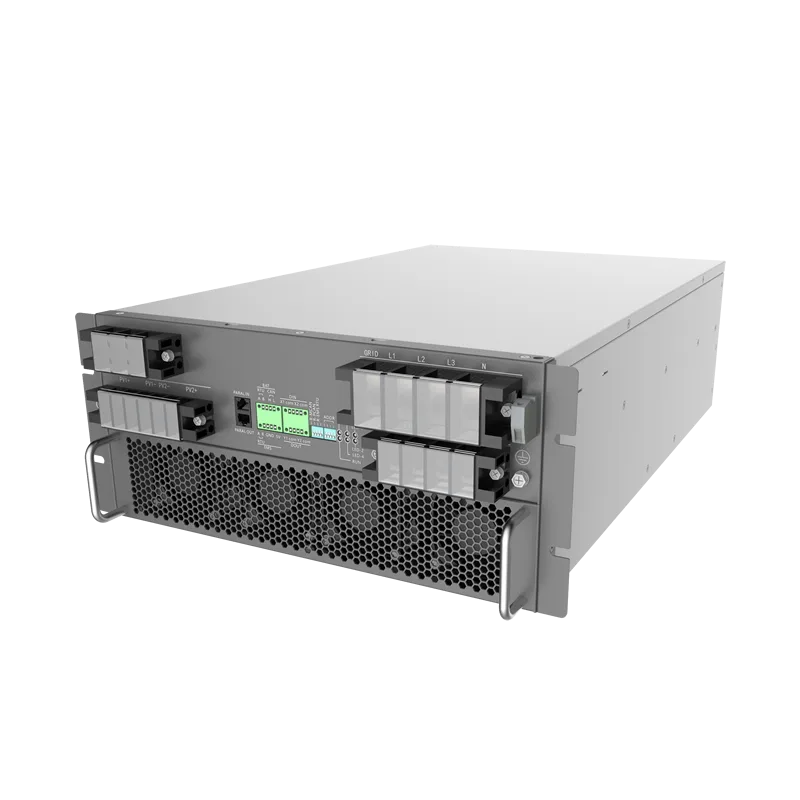
Hybrid inverter (small and medium-power C&I)
- Rated power (grid-tied)60/50/40/30kVA
- Maximum efficiency98,2%
- Overload capability150%
- Grid voltage range-20%~+15%
- Current harmonics (load>30%)<3%(carga >30%)
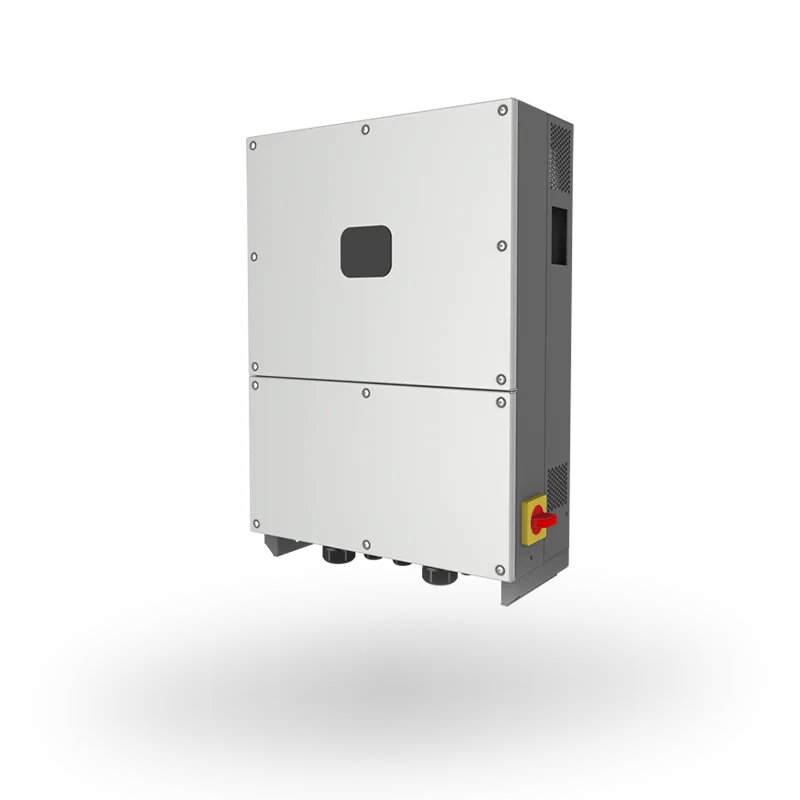
Microgrid energy storage PCS (optional built-in STS)
- Rated power (grid-tied)125kVA
- Maximum efficiency98,5%
- Transfer time<10ms
- Power factor-1~1
- Grid-tied unbalance125%
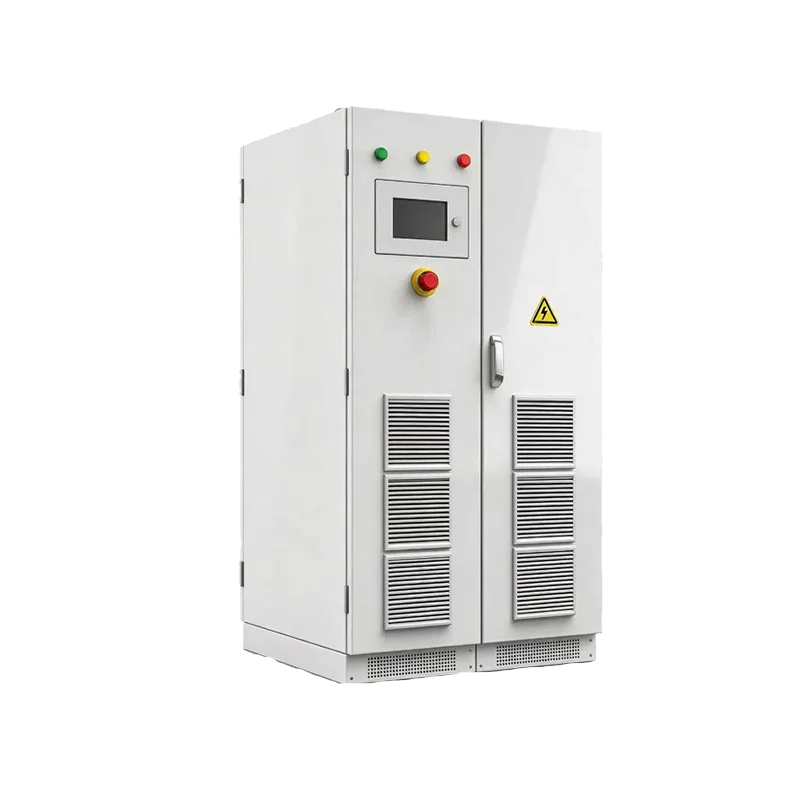
PV-storage grid-tied/off-grid all-in-one unit
- Rated power (grid-tied)250kVA
- Maximum output (off-grid)275kVA
- PV power120kW×2
- Maximum battery current200A×2
- Protection ratingIP54
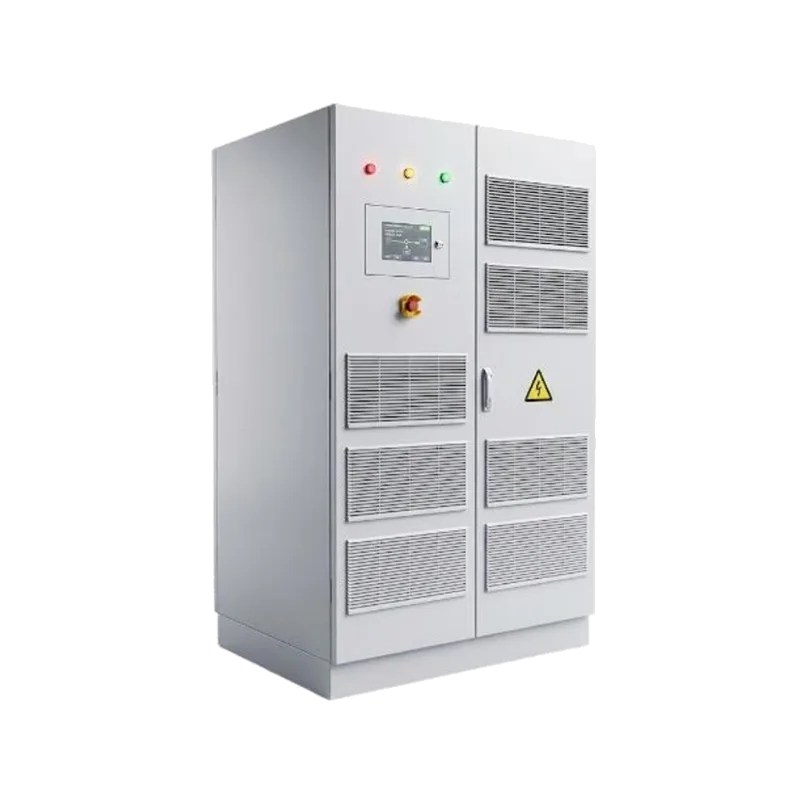
Series PV-storage grid-tied/off-grid all-in-one unit
- Rated power (grid-tied)375kVA / 500kVA
- PV power120kW×3 / ×4
- Charging efficiency>99,3%
- Parallel units3
- Protection ratingIP54/IP20
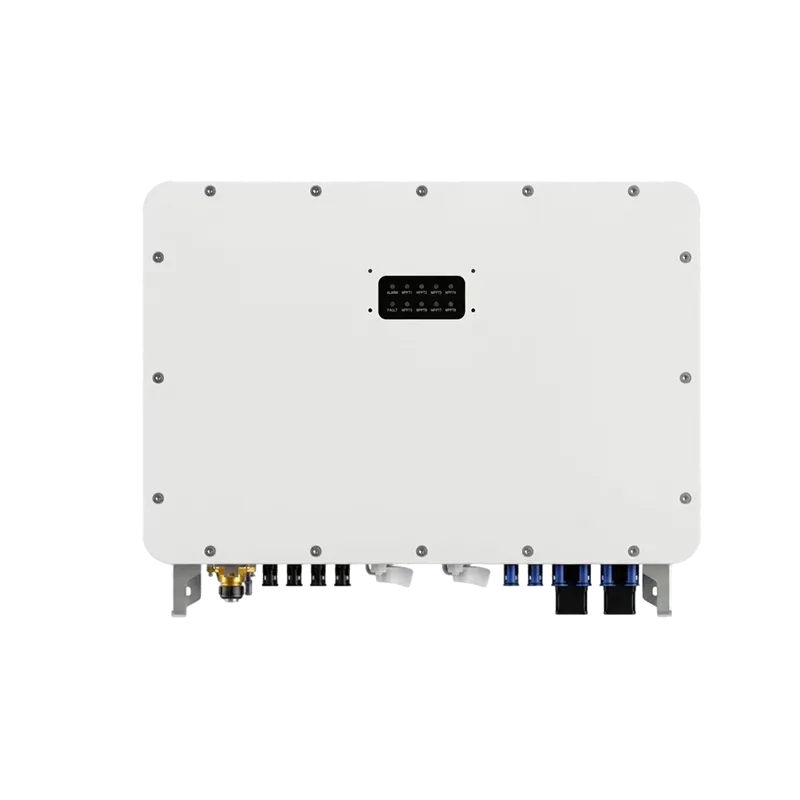
PV MPPT controller (DC-side accessory)
- Rated power200kW / 150kW
- MPPT voltage range200V-900V
- Maximum efficiency99,26%
- Protection ratingIP65
- Installation methodPared
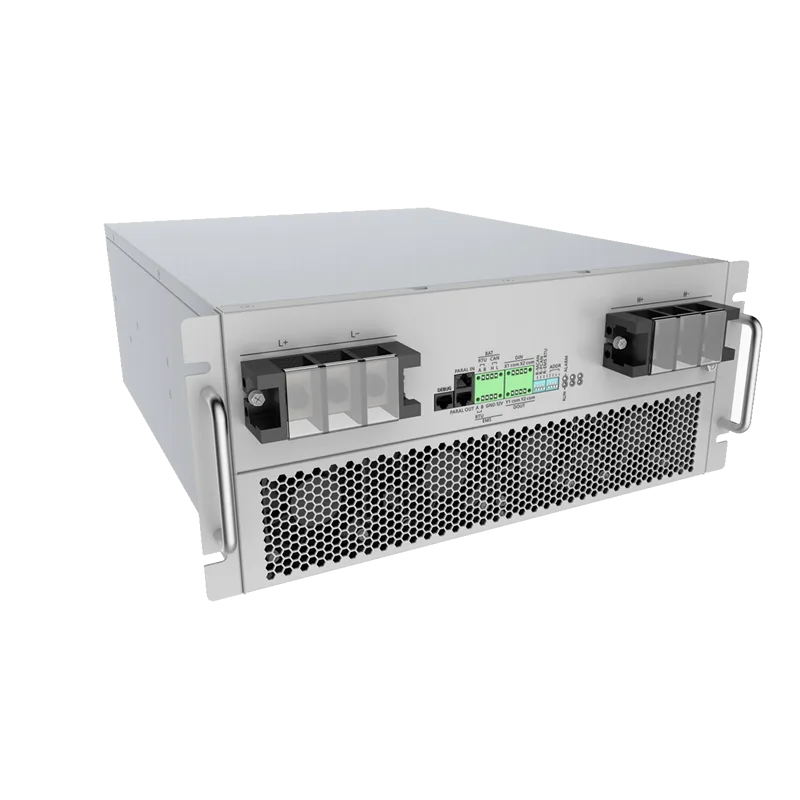
Rack-mounted DC controller (DCDC)
- Rated power210kW
- Input-side voltage range200V-950V
- Maximum input current300A
- Maximum efficiency99,2%
- Parallel connection of multiple unitsAdmitido
How to calculate the capacity configuration
Three steps: first determine the power window, then determine the energy revenue, and finally verify and correct.
-
Step 1: Power capacity — determined by the charge and discharge windows
- Record the start and end times of the peak and valley periods on a typical day, and calculate the available charge and discharge window durations
- The grid-tied power is usually taken as the maximum charge and discharge amount that can be completed within the window, with a 10%–20% margin
- Also check the transformer capacity: the charging current during the same period also occupies the distribution transformer load
-
Step 2: Energy capacity — determined by price spread revenue and return on investment
- Estimate the annual revenue as "cycle depth × daily cycles × days × electricity price spread"
- Then work backwards from the target payback period to the allowable initial investment, and divide by the system unit price to get the required capacity
- Demand management revenue should be calculated separately and not simply added to arbitrage revenue
-
Step 3: Verification and correction
After completing the first two steps, go back and check three things: whether the transformer still has margin to carry the charging current; whether fire protection and site conditions are satisfied (there are clear requirements for battery compartment spacing, ventilation and fire suppression configuration); and whether the revenue model uses only static parameters. C&I electricity tariffs often have tiered rates and adjustments to peak and valley periods, so the revenue calculation should leave a margin for deviation.
Core pain point: rural distribution area voltage and PV consumption
At the end of the distribution network, distribution area transformers commonly suffer from the problem of "voltage being too high at noon, and voltage exceeding limits due to reverse PV feed-in from end users".
As rural distributed PV installations grow, some low-voltage distribution areas show obvious voltage problems: when PV output is high at noon, the end-of-line voltage may exceed the +7% upper limit specified in GB/T 12325; and in the evening when the load falls and storage has not yet discharged, the voltage drops rapidly again.
Why voltage problems occur in distribution areas
Low-voltage lines have relatively high impedance, and the voltage drop caused by power flowing through the line superimposes on the reverse power flow, amplifying the voltage deviation at the end of the line. This is difficult to solve economically with pure AC voltage regulation means.
What role energy storage plays in this
Energy storage absorbs surplus power when PV output is high at noon and releases it during the evening load peak, which is equivalent to shifting "uncontrollable PV output" to "the time of electricity use". This solves two problems at once: PV consumption and voltage limit violations.
VGID POWER's corresponding models
The [SP60/50/40/30HCG2 hybrid inverter](/zh/product/sp60-50-40-30hcg2) is wall-mounted, has 150% overload capability, is compatible with 280/314 Ah cells, and suits the working conditions of small-capacity, high-frequency dispatch at the distribution area level; the [SP135HAPSS series microgrid energy storage PCS](/zh/product/sp135hapss) has IP65 protection and a maximum bypass current of 230 A, with built-in ATS dual AC inputs, making it suitable for outdoor distribution area locations with high humidity and strict protection requirements.
Typical application scenarios
Peak-valley arbitrage energy storage
Standalone energy storage that uses the two-tier price spread to complete daily cycles, suitable for provinces with a clear peak-valley price spread.
Factory energy storage microgrid
For manufacturing enterprises with large load fluctuations, peak shaving through demand management significantly reduces the basic electricity charge.
C&I PV + storage
Integrated rooftop PV + storage configuration increases the self-consumption ratio and reduces surplus power feed-in and capacity limitation issues.
PV arbitrage with storage
Provides storage solutions for existing PV plants or plant investors, easing consumption pressure.
Distribution area energy storage
Voltage management and PV consumption in rural low-voltage distribution areas, mainly using wall-mounted small-capacity models.
Commercial buildings and parks
Unified dispatch in multi-user park scenarios enables combined optimisation of peak shaving and valley filling and demand control.
Data centres and production line backup power
Combines arbitrage and backup power, with one system covering both economic operation and guaranteed supply for critical loads.
Charging station supporting energy storage
Eases the impact of charging loads on the distribution transformer, shaving peaks and filling valleys while reducing distribution capacity costs.
Design points and common pitfalls
-
① Quoting by capacity alone without accounting for usable energy
Nominal capacity is not equal to usable energy. The actual usable value is affected by the SOC operating window, depth of discharge and temperature. The contract should clearly define usable energy and the test conditions, otherwise the payback period calculation will be systematically optimistic.
-
② Ignoring the transformer load occupied by charging
The charging current and the production load current run through the same line and the same transformer. Although the load is low during valley periods, the transformer still has capacity constraints. When calculating, the charging current should be added to the other loads during that period.
-
③ Treating demand control as scheduled charging and discharging
Demand control is closed-loop control that follows load peaks, not action according to a fixed timetable. If the load peak time drifts while the charge and discharge schedule is fixed, the actual peak still exists. The EMS needs real-time load tracking capability.
-
④ Ignoring fire protection and site conditions
There are clear regulatory requirements for battery compartment spacing, ventilation conditions and fire suppression system configuration. Retrofitting old factory buildings often gets stuck on site conditions rather than equipment selection, and this item should be verified at the early design stage.
-
⑤ Calculating only the static payback period
C&I electricity tariffs fluctuate due to policy adjustments and changes in peak and valley periods; batteries have capacity degradation; equipment has a degradation curve. It is recommended to calculate using conservative electricity prices and conservative cycle counts, and to provide a 3–5 year cash flow scenario.
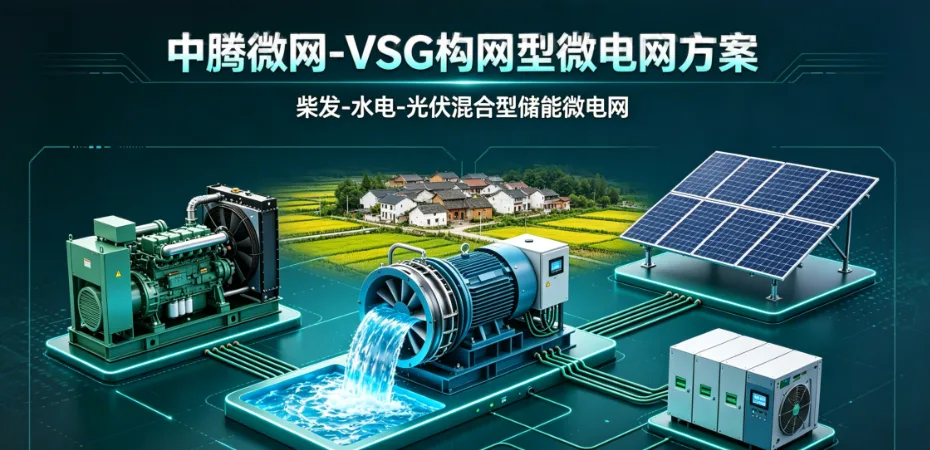
Project photos





Frequently asked questions
Can grid-tied energy storage supply power during a grid outage?
It depends on the equipment configuration. A pure grid-tied PCS will shut down immediately after a power loss (required by anti-islanding protection) and cannot continue to supply power. To have backup power capability, a model supporting grid-tied/off-grid transfer must be selected — the VGID POWER SP125HCPS is available in a version with a built-in STS (transfer <10 ms), and the SP250HAG2T / SP375/500HAG2 can achieve 0 ms active transfer. If only critical loads need backup power, an independent STS200/400/600 transfer module can also be selected.
Can energy storage replace transformer capacity expansion?
Under specific conditions it can alleviate the issue, but it usually cannot fully replace it. Transformer capacity expansion solves the problem of the capacity ceiling, while energy storage solves the problem of the load curve shape. For short-duration surge loads or superimposed peak usage scenarios, capacity expansion is still needed; but for loads that "peak during the day and sit idle at night", the capacity release brought by energy storage replacing peak shaving may avoid a capacity expansion investment. The specifics need to be calculated in combination with the load curve and the short-circuit capacity at the connection point.
Can one unit do both arbitrage and backup power at the same time?
Yes, but the priority needs to be clearly defined. Models supporting grid-tied/off-grid operation perform arbitrage under normal conditions and automatically switch to off-grid mode to supply critical loads during a power outage. In engineering practice, an SOC lower limit is usually set (for example 30%), below which the unit does not participate in discharge dispatch, in order to preserve backup power capability. This lower limit needs to be clearly defined in the contract and during commissioning, otherwise the backup time will be shorter than expected.
How long is the investment payback period generally?
It depends on the peak-valley price spread, the basic electricity price, local subsidy policies and the initial investment unit price. When calculating, it is recommended to use conservative conditions: use the current price spread rather than the expected price spread, consider the annual battery capacity degradation, and count subsidies according to verifiable policies. VGID POWER provides revenue calculations based on actual load curves, and will list the assumptions together with the quotation, making it easier for both parties to align expectations.
Want to know how much your project can save on electricity bills?
Provide your company's electricity consumption curve for the past 12 months and peak-valley period information, and VGID POWER can complete the capacity configuration, revenue calculation and equipment selection accordingly, and provide an implementable grid-tied energy storage solution.
Get a revenue calculation and solution